
You’ve probably been there — standing at a party or scrolling social media — when someone calls their new Tesla a “luxury car.” And you’re not sure whether to nod or push back.
It’s a surprisingly complex question.
Tesla sits in a strange in-between space. It’s not a traditional luxury brand like Mercedes-Benz or BMW. But it’s definitely not a mass-market brand like Toyota or Honda either.
So what is Tesla, exactly?
This guide answers that question thoroughly — covering Tesla’s brand positioning, price ranges across the USA, UK, Canada, and globally, what “luxury” actually means in the automotive world, and whether buying a Tesla is worth it.
Let’s get into it.
What Does “Luxury Car” Actually Mean?
Before we answer “is Tesla a luxury car,” we need to understand what luxury actually means in the car world.
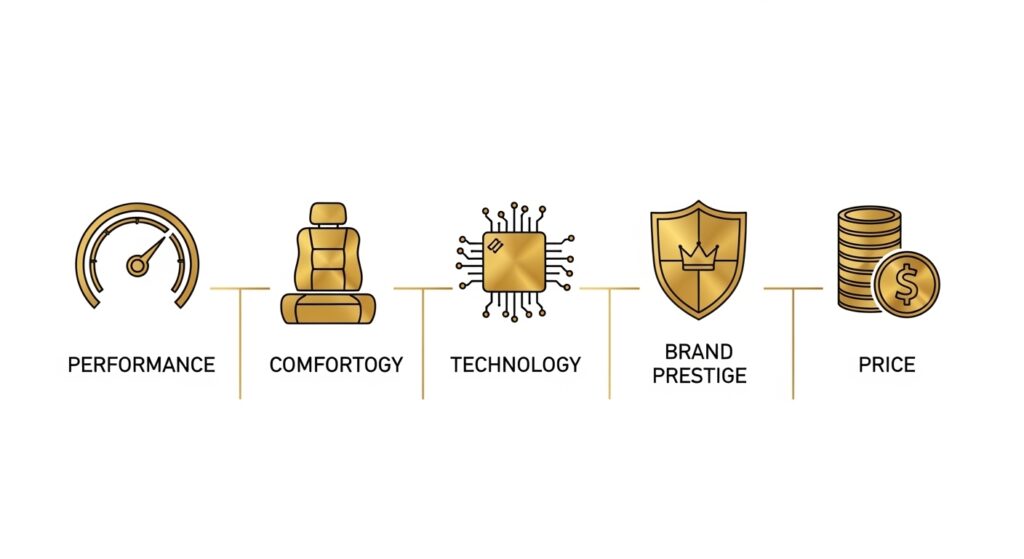
A luxury vehicle isn’t just an expensive car. It typically combines several elements:
- Premium materials: Leather interiors, wood or aluminum trims, noise-canceling cabins
- Advanced technology: Driver-assist systems, premium audio, large digital displays
- Superior performance: Powerful engines, smooth suspension, refined driving dynamics
- Brand prestige: Heritage, reputation, and aspirational value
- High price point: Usually starting at $35,000–$40,000+ (USD)
- After-sales service: White-glove dealership experience
According to Kelley Blue Book, luxury vehicles are generally defined by a combination of price, technology, and refinement rather than any single factor.
Traditional luxury brands include Mercedes-Benz, BMW, Audi, Lexus, and Cadillac.
Tesla doesn’t fit neatly into that list — but it checks many of the same boxes.
Is Tesla a Luxury Car Brand? The Official Classification
How Industry Analysts Classify Tesla
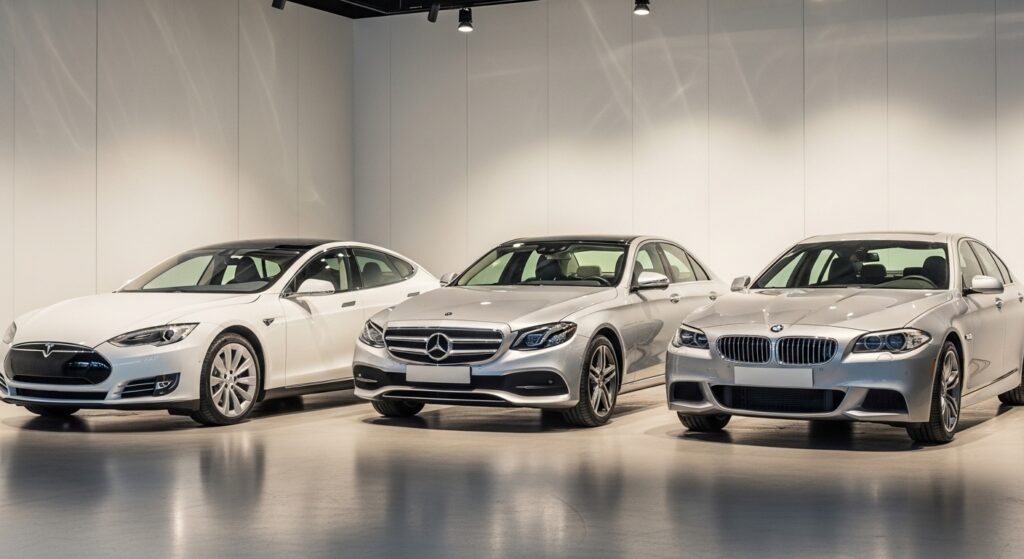
The short answer: Tesla is widely considered a luxury car brand, though it occupies a unique category of its own.
Edmunds, one of the most trusted car research platforms in the US, classifies several Tesla models — including the Model S and Model X — as luxury vehicles. The Model 3 and Model Y sit in the near-luxury or premium segment.
Consumer Reports, which surveys thousands of car owners annually, consistently places Tesla at the top of owner satisfaction rankings — a key indicator of luxury positioning.
The Insurance Institute for Highway Safety (IIHS) has awarded Tesla models top safety ratings, another characteristic of premium vehicles.
Is Tesla Considered Luxury by the IRS and Tax Agencies?
In the United States, the IRS uses a “luxury vehicle” classification for cars above certain values. Many Tesla models — particularly the Model S, Model X, and Model 3 Long Range — fall under this IRS luxury auto limit for depreciation purposes.
This means even the US government technically considers Teslas to be luxury vehicles for tax purposes.
The “Tesla Is Not a Luxury Car” Argument
Some critics argue Tesla is not truly a luxury car brand in the traditional sense. Here’s why:
- Tesla lacks a century-long heritage like Rolls-Royce or Mercedes
- Its service experience has historically been criticized compared to legacy luxury dealers
- The Model 3 starts at a price accessible to middle-class buyers
- Tesla’s interiors, while tech-forward, lack the handcrafted material richness of brands like Bentley or Lexus
So the real answer? Tesla is a luxury brand in many ways, but a different kind of luxury. It’s tech-luxury, not heritage-luxury.
Tesla Car Lineup and Prices in the USA
How Much Is a Tesla in the USA?
Tesla’s pricing in the US changes frequently due to Elon Musk’s dynamic pricing strategy. Here are starting prices as of April 2026, based on data from Tesla’s official website:
| Model | Starting Price (USD) |
|---|---|
| Tesla Model 3 | $36,990 |
| Model Y | $39,990 |
| Tesla Model S | $109,990 |
| Tesla Model X | $114,990 |
| Cybertruck | $69,990 |
The Model S and Model X are clearly in luxury territory. The Model 3 and Model Y are more accessible — comparable to an entry-level BMW 3 Series or Audi A4.
US buyers may also be eligible for a federal EV tax credit of up to $7,500 under the Inflation Reduction Act, which can significantly reduce the effective purchase price.
The Tesla Car Logo: What Does It Actually Mean?
What Is the Tesla Car Symbol?
The Tesla logo is a stylized capital “T” in a distinctive rounded shape. It’s one of the most recognizable automotive symbols in the world.
Elon Musk himself has explained the logo’s meaning: the “T” shape represents a cross-section of an electric motor’s rotor, with the curved top representing a piece of the stator. It’s a nod to Tesla’s pure-EV engineering heritage.
The logo is named after Nikola Tesla, the legendary Serbian-American inventor whose work on alternating current (AC) electricity formed the foundation of modern power systems.
Interestingly, the Tesla logo was designed by the firm RO|DESIGN and has remained largely unchanged since the company’s early days — a sign of strong brand identity.
Is Tesla a Luxury Brand? Comparing Tesla to Traditional Luxury Automakers
What Tesla Does Better Than Traditional Luxury Brands
Tesla genuinely outperforms many legacy luxury brands in several areas:
1. Technology and Software
No car manufacturer comes close to Tesla’s software integration. Over-the-air (OTA) updates mean your car literally improves overnight. The 15.4-inch touchscreen in the Model S is still larger than most competitors years after its release.
2. Performance
The Tesla Model S Plaid does 0–60 mph in under 2 seconds, making it one of the fastest production cars on Earth. That’s a specification that would humble most traditional sports cars.
3. Autopilot and Safety
Tesla’s Autopilot and Full Self-Driving (FSD) suite is among the most advanced driver-assistance systems available. The Model 3, Model Y, and Model S have all earned 5-star NHTSA safety ratings.
4. Total Cost of Ownership
Despite higher upfront costs, Teslas tend to have lower running costs. According to the US Department of Energy, EVs generally cost significantly less per mile to fuel than gasoline vehicles. Fewer moving parts also mean lower maintenance costs.
Where Traditional Luxury Brands Win
- Interior craftsmanship: A Mercedes S-Class or Lexus LS still offers richer, more tactile interior materials
- Dealer experience: Legacy luxury dealers offer white-glove service; Tesla’s service model has faced criticism
- Driving feel: Brands like BMW and Porsche still lead in pure driving engagement
- Heritage and prestige: Tesla doesn’t yet carry the decades of brand prestige that Rolls-Royce or Mercedes commands
Pros and Cons of Buying a Tesla as a Luxury Car
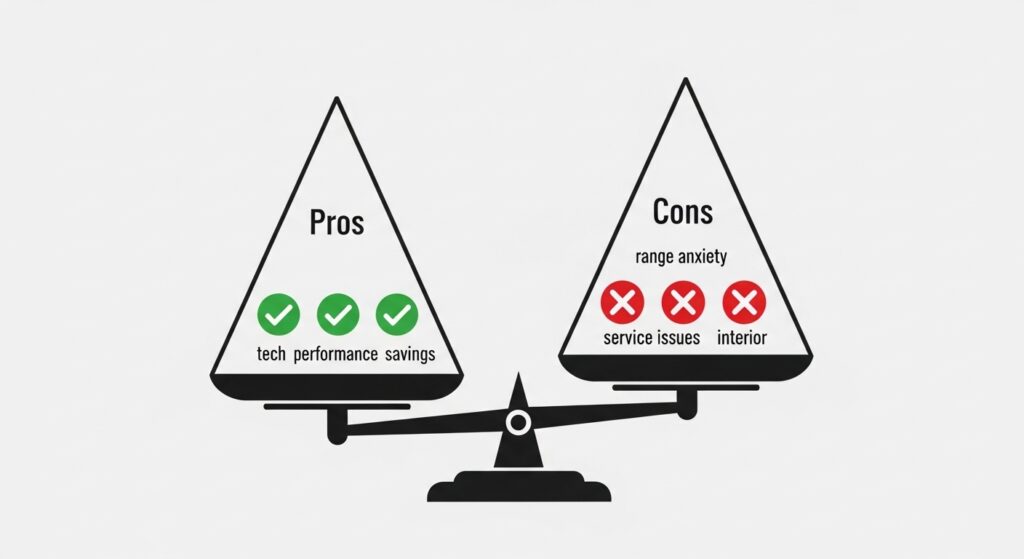
Pros of Buying a Tesla
- Cutting-edge technology and software updates
- Exceptional performance (especially Plaid variants)
- Lower fuel and maintenance costs long-term
- Strong resale value compared to many luxury brands
- Access to Tesla’s proprietary Supercharger network — the largest fast-charging network in North America
- Environmental benefits of zero tailpipe emissions
- Federal and state/provincial EV tax incentives
Cons of Buying a Tesla
- Higher upfront purchase price vs. equivalent non-EV vehicles
- Range anxiety — especially for long road trips in areas with sparse charging
- Tesla’s service center availability can be limited in some regions
- Interior material quality lags behind equivalent Mercedes/Lexus offerings
- Resale value can be volatile due to Tesla’s frequent price changes
- The minimalist interior (no traditional gauges, buttons) isn’t for everyone
Are Teslas Considered Luxury Cars by Insurance Companies?
How Insurers View Tesla
Yes — insurance companies generally classify Teslas as luxury vehicles, which means higher premiums than average.
According to NerdWallet’s auto insurance analysis, Tesla vehicles typically cost more to insure than comparable gas-powered vehicles for several reasons:
- Higher vehicle replacement cost
- Expensive proprietary parts and repair processes
- Tesla’s own insurance product (Tesla Insurance) is available in some US states and often competitive
For UK buyers, Comparethemarket and MoneySupermarket typically show Tesla insurance quotes in Group 40–50 — the highest insurance groups, reserved for premium and luxury cars.
Expert Tips: Getting the Most Value from a Tesla Purchase
Here are some expert-backed tips whether you’re buying in the US, UK, Canada, or globally:
1. Buy at Year-End or Quarter-End
Tesla often pushes hard to meet delivery targets at the end of quarters (March, June, September, December). This can lead to incentives or faster delivery windows. Monitor Tesla forums for community-reported deals.
2. Check the Used Tesla Market
Tesla’s frequent price cuts have made the used/certified pre-owned Tesla market very attractive. You can find used Model 3s with low mileage for significantly less than MSRP. Check Tesla’s Used Vehicle Inventory.
3. Factor in Total Cost of Ownership
Use the US DOE’s Vehicle Cost Calculator or the Tesla TCO tool to compare 5-year total costs vs. a comparable ICE vehicle. The savings on fuel and maintenance often justify the premium price.
4. Check Local Incentives Before Buying
In the US, use the Alternative Fuels Station Locator and Incentive Finder to see state-level EV incentives.
5. Test Drive Before Committing
The Tesla experience — minimalist interior, yoke steering (on Model S/X), instant torque — isn’t for everyone. Book a free test drive at a Tesla showroom before committing to a purchase.
Tesla Model Breakdown: Which Is the Most Luxurious?
Tesla Model S — The Flagship Luxury Sedan
The Tesla Model S is Tesla’s undisputed luxury flagship. Priced from $109,990 in the US, it competes directly with the Mercedes S-Class, BMW 7 Series, and Audi A8.
The Plaid variant is one of the fastest production sedans ever made, with a claimed 0–60 mph time of 1.99 seconds.
Tesla Model X — The Luxury Family SUV
The Model X starts from $114,990 in the US and features the iconic falcon-wing rear doors — a design statement matched by few SUVs. It competes with the BMW X7, Audi Q8, and Mercedes GLS.
Tesla Model 3 — The Accessible Premium Sedan
At $36,990 in the US, the Model 3 is Tesla’s entry-level car, but it’s still premium by market standards. It competes with the BMW 3 Series and Audi A4.
Tesla Model Y — The Best-Selling Tesla
The Model Y became the world’s best-selling car, according to Reuters. At $39,990, it sits in the crossover/premium SUV category.
Frequently Asked Questions (FAQs)
1. Is Tesla a luxury car brand?
Yes, Tesla is widely considered a luxury car brand, particularly its Model S and Model X models. The Model 3 and Model Y occupy the near-luxury or premium segment. Tesla offers technology, performance, and safety features consistent with luxury vehicles, though it differs from traditional luxury brands in terms of interior craftsmanship and heritage.
2. Are Teslas considered luxury cars by insurance companies?
Yes. Insurance companies typically classify Teslas as luxury vehicles due to their high replacement costs, proprietary parts, and repair complexity. This means Tesla insurance premiums are generally higher than average. Tesla also offers its own insurance product in select US states.
3. Is a Tesla worth buying as a luxury car?
For tech-forward buyers who prioritize performance, sustainability, and cutting-edge features, a Tesla offers exceptional value in the luxury segment. If you prioritize traditional luxury metrics like handcrafted materials, heritage prestige, and an immersive dealership experience, brands like Lexus or Mercedes may feel more satisfying. The best approach is to test drive and compare total cost of ownership before deciding.
Final Verdict: Is Tesla a Luxury Car?
Here’s the bottom line:
Yes, Tesla is a luxury car brand — but it has redefined what luxury means.
It’s not the champagne-and-leather luxury of a Bentley or the precision engineering prestige of a BMW. It’s tech-first luxury: massive touchscreens, mind-bending performance, over-the-air software updates, and the satisfaction of driving something that feels like it’s from the future.
The Model S and Model X are unambiguously luxury vehicles by any mainstream definition. The Model 3 and Model Y are premium-segment cars that punch above their price points in technology and performance, even if the interior materials don’t quite match a Mercedes.
Whether you’re in the USA, UK, Canada, or anywhere else globally, Tesla occupies a unique space — more premium than mainstream, less stuffy than traditional luxury.
And for a growing number of buyers around the world, that’s exactly what modern luxury looks like.