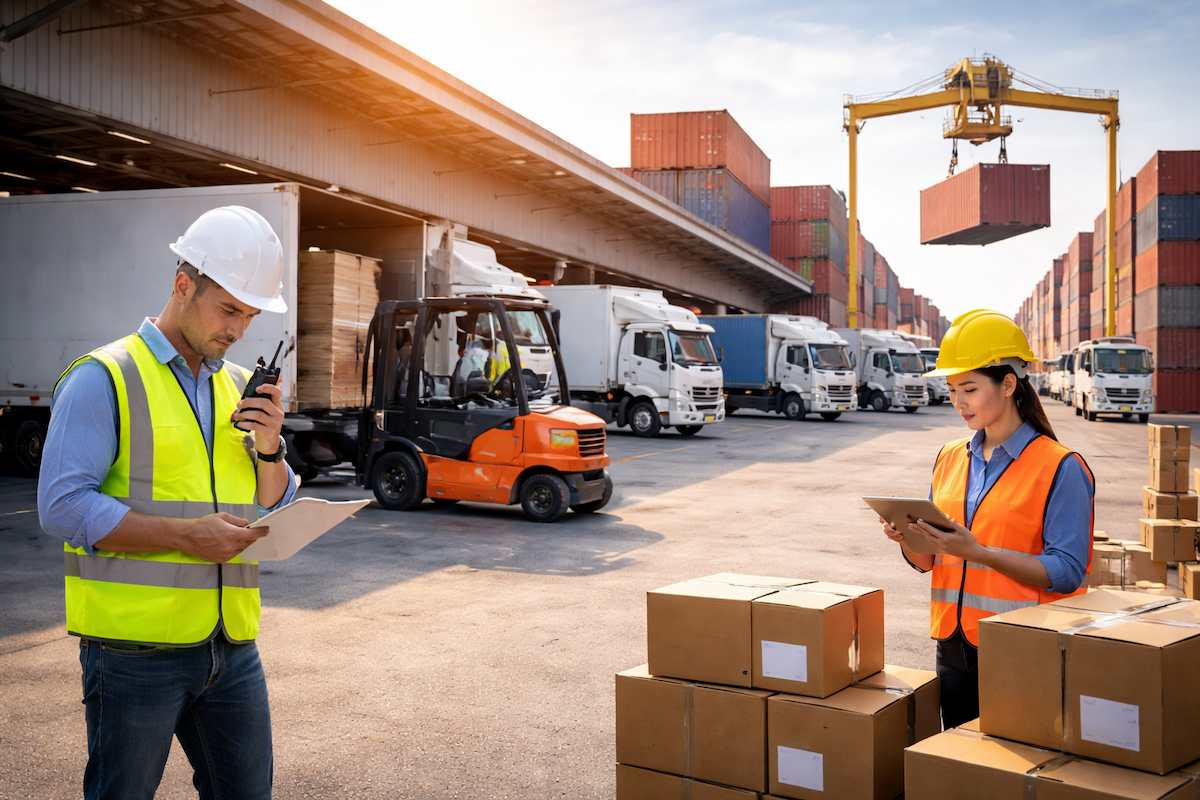

In today’s online world, I’ve noticed how Logisths is gaining increasing frequency across content, search, queries, and even casual business discussions. Many readers find it an unfamiliar term, while others see it as a variation of a known concept tied to traditional logistics. From my own experience working with operational systems, the initial reaction is always driven by desire—people want a clear, complete, and honest explanation. This includes understanding its origins, its relationship with older models, what it encompasses, and how it applies in practical terms within modern workflows.
What makes this article unique is how it delivers and covers every word and idea behind the system Logisths involves. It examines how technology has transformed the discipline over the past decade, why it differs from supply chain management, and how it addresses real challenges practitioners face in the field. From what I’ve personally seen, the heading focus is not just theory but the most available and practical treatment of the subject—written without unnecessary padding, repetition, or vague generalisations that often characterise existing explanations on this subject.
Understanding Its Origin and Meaning
The word Logisths does not appear in traditional academic dictionaries, and that exact spelling is a fact worth stating directly instead of obscuring. From my experience reading blog content and business writing, I’ve seen it gained traction as a modern, conceptual variation of the term logistics. It shows up in digital discussion, especially in contexts where foundational principles are being reexamined through the lens of transformation, supply chain integration, and technology–driven coordination.
At its core, the term represents a shift that is both linguistic and conceptual, still rooted in the same heritage but now applied in a contemporary way. It helps describe the structured management of goods, services, information, and resources across connected networks. Its usage clearly reflects the evolution of the underlying discipline, where online creation constantly generates variant spellings that accumulate their own independent search presence.
To better understand its meaning, we can look at where it derives from—the Greek term logistikos, linked to being skilled in calculating, and logos, connected to reason and rational thought. Later, the French military theorist Antoine-Henri Jomini formalised it in the nineteenth century, defining it as the art of moving armies, coordinating supply lines, timing movements, and managing the flow of equipment and provisions across theatres of operation. Over time, it entered commercial vocabulary and expanded into one of the most economically significant disciplines.
Today, Logisths inherits that history and is used to explain the core activity—an organised, systematic way goods move from origin to destination, guided by planning, accountability, and every stage of execution. The key distinction, to some extent, is how it places emphasis on integrated, data-focused processes. This modern character of logistics acknowledges both physical activity and intensive reliance on software, systems, real-time insights, and analytical intelligence, along with trucks, warehouses, and shipping containers.
Core Building Blocks of the System
- A Logisths system is a practice made of interconnected, functional components that must operate with strong coordination to deliver reliable results. From hands-on working and managing, I’ve seen that proper understanding is essential when evaluating logistics operations at scale.
Transportation and Movement Intelligence
- Transportation management is the most visible and often costly part, encompasses key decisions and activities around moving goods physically across supply networks.
- It involves selecting the appropriate mode like road, rail, sea, or air, choosing carriers, optimising routes, and managing freight costs.
- Strong focus on ensuring regulatory compliance across different jurisdictions of travel.
- Requires effective planning that involves constant optimisation, balancing speed, cost, flexibility, and capacity in transport.
- Aligns timing of shipments with production schedules, customer delivery windows, and responding dynamically to disruptions like port congestion, weather events, and carrier failures.
- Modern systems such as TMS automate the process using real-time data like availability, fuel, traffic, conditions, and customs requirements to recommend and execute optimal routing decisions faster and more accurately than human planners using manual tools.
Warehousing and Distribution Dynamics
- Warehousing and distribution go beyond passive storage; warehouses now function as active, operational hubs.
- Goods are received, sorted, stored, picked, packed, and dispatched based on demand signals.
- Strategic placement of facilities in the network, near manufacturing sources, transport corridors, or end populations, directly affects delivery speed and cost.
- Warehouse management tools like WMS coordinate the flow, assigning locations, directing picking, managing receiving workflows, and tracking inventory positions.
- Integration of automated equipment such as conveyor systems, robotic arms, and guided vehicles like AGVs has transformed labour intensive processes into highly capable systems handling enormous volumes with precision.
Inventory Control and Demand Insights
- Inventory management and demand forecasting sit at the intersection of operational efficiency and financial performance.
- Holding excess capital creates obsolescence risk, while stockouts can damage relationships and erode revenue.
- Systems maintain optimal levels to balance pressures, fulfil needs, and avoid waste or excess.
- Uses analytical discipline, including analysing historical sales, seasonal patterns, promotional calendars, and market trends to generate predictions.
- These insights guide procurement, production, and positioning, improving accuracy and helping systems operate more efficiently.
Order Fulfilment Excellence
- Order fulfilment covers the full sequence of activities from the moment a customer places an order until it arrives at the destination in the correct condition.
- Includes receipt, processing, allocation, picking, packing, shipping, document generation, handoff, tracking, and handling exception problems.
- In e-commerce environments, speed and accuracy act as a competitive differentiator.
- Consumer expectations influenced by Amazon demand same-day delivery in major markets, along with reliable updates and seamless returns as the new standard.
Returns and Reverse Flow Management
- Returns management and reverse logistics handle goods flowing back through the chain to manufacturers or disposal facilities.
- Rising return rates between 15 and 30 percent, especially in apparel, add substantial complexity.
- Requires receiving, sorting, handling returned goods, assessing condition, restocking, refurbishing, reprocessing, or disposing unsalvageable items.
- Must follow compliant and environmentally responsible ways to ensure sustainable operations.
Technology Driving Modern Logisths
Real-Time Visibility & IoT Integration
- IoT devices embedded in shipping containers, vehicles, warehouse equipment, and product packages capture continuous streams of location, condition, and status data.
- Operators gain real-time visibility across the supply chain, ensuring temperature-sensitive cargo stays within required ranges and delivery timelines are met.
- This system enables proactive exception management, identifying problems or failures early, allowing corrective action to prevent customer impact.
AI-Powered Forecasting & Optimization
- Artificial Intelligence (AI) enhances demand forecasting models, using external sources like weather patterns, social media trends, and economic indicators, along with internal sales history.
- Route optimisation algorithms handle thousands of variables to determine the lowest-cost and fastest-delivery routing configurations.
- Predictive maintenance systems identify vehicles likely to fail, boosting carrier performance and ensuring transport partners deliver consistently.
Machine Learning & Analytics
- Machine learning leverages processing experience to improve performance, producing optimal outcomes in complex rule-based scenarios.
- Analytics provide insights to enhance reliability and reduce operational risks across the logistics network.
Blockchain for Trust & Compliance
- Blockchain technology offers immutable, verifiable records for goods movements among multiple parties, ensuring trust in food chains or pharmaceutical supply lines.
- Supports track-and-trace regulations, compliance, and replaces paper-heavy bill-of-lading processes in global trade, saving days in international shipments.
Automation & Robotics in Warehousing
- Modern warehouses use autonomous mobile robots (AMRs) to navigate floors, transport inventory, and assist at picking stations.
- Automated storage and retrieval systems (AS/RS) maximize density in high-bay facilities, while drones perform cycle counts with minimal human intervention.
- Automation is fundamentally reshaping the economics and operational profile of logisths, making handling activities faster, safer, and more accurate than ever.
The Historical Evolution of Logisths
Industrial Growth and Commercial Systems
Logistics evolved significantly during the Industrial Revolution, where railways and steamships enabled products to travel faster across expanding cities. Factories producing mass goods required structured distribution networks, and commercial logistics became an essential business operation. This included stock management, planned deliveries, and supplier coordination in retail chains, catalogue companies, and department stores. Even with manual records and telephone-based coordination, the structural principles mirrored the precise calculations of Roman and Greek military planners handling campaigns, army supplies, and logistical operations over vast regions.
Digital Transformation and Modern Logisths
The digital era introduced ERP systems, e-commerce platforms, and global supply chains covering multiple countries, redefining logistics as Logisths. Tracking software monitors the exact position of each shipment, while warehouse management systems replace paper inventories. Transport management tools optimize multi-modal routing, meeting consumer demands for same-day and next-day deliveries. The combination of tools, data analysis, and digital frameworks allows moving goods from origin to destination with speed, accuracy, and reliability, continuing the evolution from ancient administrative calculation to modern, technology-driven logistics.
Logisths vs. Supply Chain Management
| Aspect | Explanation |
| Confusion & Scope | Many confuse logisths with supply chain management, using them interchangeably, which causes confusion. Supply chain management is a broader strategic discipline overseeing the network of goods flow, from raw material sourcing and supplier relationships to production planning, manufacturing coordination, and distribution strategy, ending with end customer delivery and returns. It includes strategic decisions about suppliers, partnering, manufacturing facilities, distribution networks, and balancing resilience with efficiency. |
| Execution Layer | Logisths is the execution layer of the supply chain. It manages physical activities and informational activities to create operational reality. This includes moving goods, managing storage, fulfilling orders, and coordinating transport to ensure processes run reliably, efficiently, and at acceptable cost. Strong logistics execution ensures supply chain plans are effectively implemented. |
| Risks of Confusion | Mixing up logisths and supply chain management can create gaps between planned performance and actual customer experience. A great supply chain strategy with weak logistics execution fails in practice, while strong logisths in a poorly structured supply chain may maintain operational consistency but produce uncompetitive performance. Clear responsibility and proper organisational structures are critical. |
| Alignment & Success | Aligning logisths with supply chain strategy ensures disciplines work in coordination at every stage of goods flow. Integration of strong execution and strategic planning delivers efficiency, reliability, and customer satisfaction, turning plans into real-world operations. This alignment embodies modern Logisths and its value today. |
Real Challenges in Logisths Operations
Running logisths effectively faces several operational challenges that impact both capabilities and benefits for businesses. The COVID-19 pandemic exposed the brittleness of lean, just-in-time supply chains that were optimised for cost rather than resilience. Disruptions like port closures, container shortages, manufacturing shutdowns, and labour interruptions caused cascading delays across global supply chains, highlighting the vulnerability of operations and forcing firms to balance efficiency and robustness using inventory buffers, supplier diversification, and nearshoring.
Last-mile delivery remains one of the trickiest parts of consumer logisths. The final kilometre from a distribution centre to an individual address can make up over 40 percent of total shipping costs and is highly visible to customers. Factors like urban density, traffic congestion, delivery failure rates, and environmental impact of delivery vehicles make last-mile optimisation a critical focus for innovation and investment.
Another challenge is labour dependency in warehousing and transportation, where human workers handle picking, packing, and loading activities, while driver shortages in road transport across North America and Europe limit capacity. Investing in automation can reduce these risks but requires significant capital expenditure, which smaller operators often cannot afford, making the balance between operational efficiency and cost a constant strategic concern.
The Future of Logisths
The future of logisths is driven by technology, sustainability, and urban logistics innovations. Autonomous vehicles, like self-driving trucks for long-haul transport and autonomous delivery robots for final-mile delivery, promise faster, safer, and more efficient operations. Sustainability is now a core operational priority, with logistics operators under pressure to reduce CO2 emissions through fleet electrification, modal shifts, and route optimisation.
Hyperlocal fulfilment is reshaping delivery networks by using smaller fulfilment nodes, micro-fulfilment centres, convenience stores as delivery hubs, and dark stores in residential neighbourhoods. This strategy compresses delivery times and shortens last-mile transport distances, but adds operational complexity. Together, these trends define how logisths will evolve, balancing efficiency, resilience, and customer expectations in modern logistics.
Conclusion
Logisths is a modern expression of one of humanity’s oldest operational disciplines, focused on the organised movement and reliable movement of goods and information. What makes it relevant today is the scale of transformation brought by digitalisation, globalisation, and rising consumer expectations for rapid delivery, transparent delivery, and reliable delivery as the baseline standard rather than a premium feature. At its core, structured planning, coordinated transportation, intelligent inventory management, and disciplined order fulfilment continue the practices of Roman generals calculating supply lines or ancient administrators managing grain shipments, even as the complexity of networks and the speed of operations grow and require advanced technological tools to remain manageable.
Every product on a shelf, every online order reaching a door, every pharmaceutical delivered to a patient, and every component arriving at a factory depends on logisths working correctly. When done well, it is invisible, yet when it fails, the consequences can range from inconvenient to catastrophic. This combination of ubiquity, invisibility, and criticality makes logisths one of the most important disciplines in the contemporary business world, demanding serious attention from all who manage, invest in, or rely on modern supply and distribution systems.